Sleep, materials & Miami living
Choosing a Naturepedic Organic Sleep Surface for Warm, Humid Nights
An organic mattress can be a thoughtful starting point for a more comfortable bedroom, but the right choice depends on more than a materials label. Construction, firmness, sleep position, pressure relief, bedding and room conditions all shape how a bed feels—especially when nights are warm and the air is humid.
For Miami residents, the goal is not to find a mattress that magically changes the climate. It is to choose a sleep surface that suits the body and pair it with practical habits that support a comfortable, well-cared-for bedroom. Understanding what different organic mattress constructions do—and what they do not promise—can make the process clearer.
Start with the sleep experience, not the label
“Organic mattress” describes a materials approach, not one uniform feel. Mattresses marketed as organic can differ in their core, comfort layers, quilting, firmness options, certifications and care instructions. One may feel buoyant and responsive; another may contour more closely or have a firmer, steadier surface. Two beds that both use natural or certified materials can still feel very different once someone lies down on them.
It helps to separate two questions. First: what materials and construction are important to you? Second: what support and comfort does your body need? A material preference may narrow the field, but it cannot determine whether a particular mattress will feel comfortable. Comfort is personal, and the best match is the one that supports your sleeping posture without creating persistent pressure or discomfort.
When researching a Naturepedic organic sleep surface—or any other organic mattress—look beyond a short product description. Review the exact model’s layer design, firmness choices, cover composition, certifications and maintenance instructions. Product families can include multiple constructions, so information about one model should not automatically be applied to every mattress from the same manufacturer.
Know the common organic mattress constructions
Materials work together in layers. The core generally provides the main support, while comfort layers and quilting influence cushioning, pressure relief and the initial sensation when you lie down. Understanding these roles helps you compare a mattress by how it is built rather than relying on broad labels.
Latex: responsive and buoyant
Latex mattresses are often chosen by people who like a springy, responsive feel. Instead of slowly settling around the body, latex typically compresses and responds as weight shifts. That can make it easier to change position for some sleepers, though individual experiences vary. The feel depends on the latex type, firmness, layer thickness and the materials surrounding it.
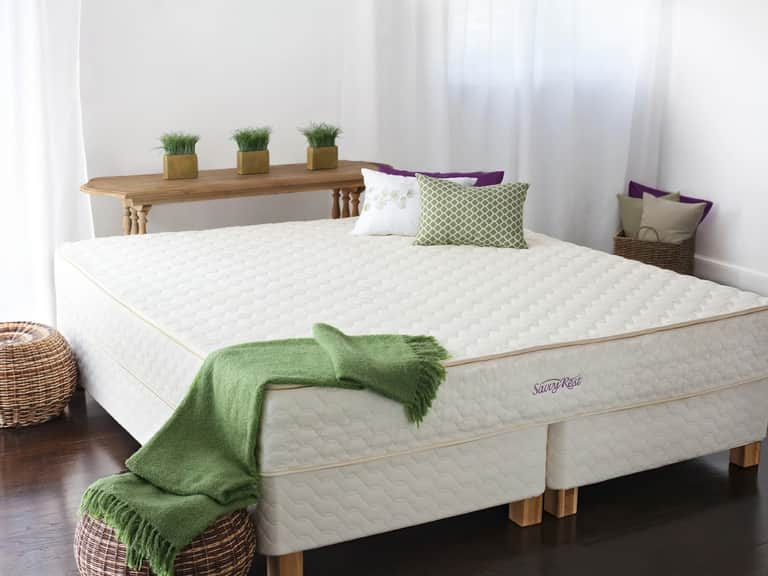
Some designs use one latex core; others stack layers with different firmness levels. A layered design can allow more adjustment than a single fixed comfort layer. For example, the Savvy Rest Serenity Latex Mattress is a customizable, three-layer latex mattress with soft, medium and firm layer options. Its construction is an example of how layer choices can change a mattress’s overall feel; it is not a Naturepedic product, and the right configuration still depends on personal testing and fit.
Innerspring and hybrid designs: support with a different surface feel
Innerspring mattresses use a coil system for support. A hybrid generally combines coils with one or more comfort layers. Depending on the design, these mattresses may feel more buoyant, more cushioned, or somewhere in between. Coil count alone does not tell you whether a bed will be comfortable. Layer materials, coil layout, firmness and the sleeper’s body all matter.
If a model includes natural or organic comfort materials above a coil core, check how thick those layers are and how they affect the feel. A mattress can have a supportive core yet still feel too firm at the surface for someone who needs more cushioning. Conversely, a plush top may not suit someone who prefers a flatter, more stable feel.
Other comfort layers and quilting
Comfort layers can include different foams, fibers or natural materials, while the outer cover and quilting influence the first impression of the bed. Quilting can add a little cushioning, but it does not necessarily change the underlying support. Ask what is in each layer and whether the cover is removable, washable or intended for spot cleaning. These practical details become important when planning long-term care.
Match firmness to sleeping position and pressure needs
Firmness is a useful comparison point, but it is not a measurement of support. A firm mattress is not automatically more supportive, and a softer one is not automatically better at relieving pressure. The goal is a surface that keeps the body comfortably aligned while cushioning areas that need it. Body shape, weight distribution, mobility and personal preference can all affect how the same mattress feels.
- Side sleepers often pay close attention to pressure at the shoulders and hips. If those areas feel compressed or sore, a more accommodating comfort layer may be worth considering. The mattress should still feel supportive through the waist and torso.
- Back sleepers may prefer a surface that supports the lower back without feeling sharply firm. Notice whether the body feels settled and supported rather than pushed upward or allowed to sink uncomfortably.
- Stomach sleepers often consider whether the hips and midsection sink too far. A more even, supportive feel may be preferable, though the right firmness remains individual.
- Combination sleepers move between positions and may value a mattress that responds easily to changes in posture. Try turning and repositioning during a mattress test, not just lying still for a few seconds.
Think about pressure relief in concrete terms. Do you wake with recurring discomfort in a particular area? Does a mattress feel comfortable at first but become bothersome after several minutes? Are you sharing the bed with someone who has different preferences? These observations are more useful than choosing a firmness based on a single rule of thumb.
For couples, separate comfort preferences can make the decision more complex. Some mattress designs allow different firmness configurations on each side, while others offer one shared feel. Confirm what customization is available for the exact size and model you are considering. If an adjustment or exchange program is offered, read its terms carefully, including time limits, fees and which components can be changed.
What warm, humid weather changes—and what it does not
Miami’s climate can make bedroom comfort a year-round consideration. Warm conditions, outdoor humidity, air-conditioning patterns and individual temperature preferences all influence the sleep environment. A mattress is only one part of that picture. Sheets, protectors, pajamas, airflow and room temperature contribute to the sensation of warmth as well.
Breathability is worth investigating, but it should not be treated as a guarantee that a mattress will feel cool. The word can describe how air moves through a material or construction, while a sleeper’s experience depends on many factors. A mattress may feel cooler or warmer to different people, and bedding placed over it can change the surface sensation. Look for specific construction details and, where possible, test the complete setup with the sheets and protector you expect to use.
Humidity also makes moisture management and regular care relevant. Sweat and everyday moisture can affect bedding, and a damp room can make textiles feel less comfortable. Choosing a breathable sheet, washing bedding on a sensible schedule and allowing the bedroom to air out when conditions permit are practical steps. Follow the mattress maker’s guidance before using cleaning products or applying moisture to the mattress itself.
Organic materials are not a substitute for ventilation, temperature management or appropriate care. Nor does an organic label alone indicate how a mattress will perform in a particular room. Evaluate the actual materials, layer arrangement and instructions rather than assuming that any one fiber or certification guarantees a cooler night.
Build a more comfortable bedroom around the mattress
A considered sleep setup begins with the room. Use air-conditioning or ventilation in a way that is comfortable and appropriate for the home, and avoid blocking vents or airflow around the bed. If the room regularly feels muggy, look at likely contributors such as closed windows during damp weather, a poorly ventilated space or bedding that holds more heat than you prefer. Persistent moisture concerns may call for advice from a qualified building or HVAC professional.
Choose bedding with the whole night in mind. Lightweight sheets may feel more comfortable to some sleepers in warm conditions, while others prefer a little more texture or weight. The weave, fiber, fit and number of layers can affect how bedding feels. A thick comforter used in a warm room may have a greater impact on heat than small differences between mattress covers.
A mattress protector can help shield a mattress from spills, dirt and ordinary wear, but its construction matters. Some protectors are designed to be breathable; waterproof options use a barrier to resist liquid. Read the product details and care directions, and consider whether the protector changes the surface feel. A protector should fit securely without bunching, and it should be washed as directed rather than left to accumulate moisture or residue.
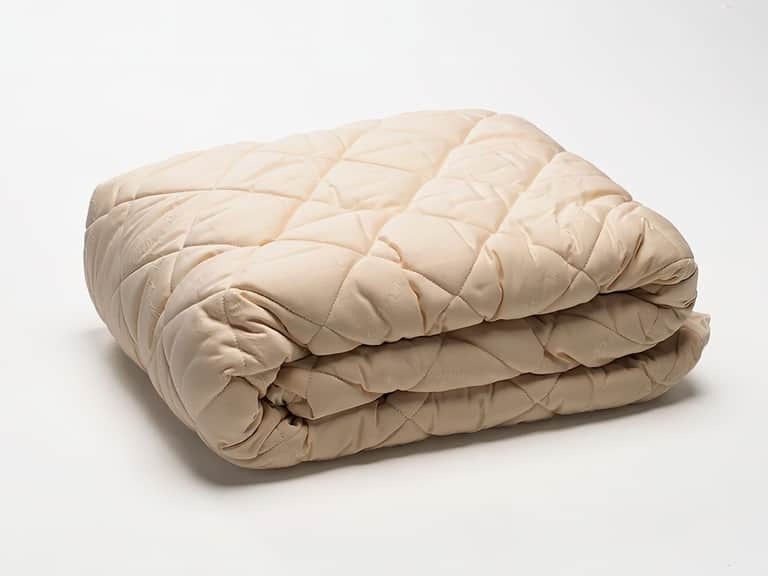
For a natural-fiber layer, the Suite Sleep Washable Wool Mattress Pad combines an organic cotton cover with washable wool fill. It is a bedding accessory, not a mattress, and may add cushioning to the surface. Anyone considering a pad should account for its added loft and follow its laundering instructions. A pad will not correct a mattress that is fundamentally unsuitable in firmness or support.
Read organic claims and certifications carefully
For shoppers who prioritize organic materials, certification details can help clarify what a claim covers. Check which component is certified: the textile, latex, fiber, or another part of the mattress. A certification relating to one material does not necessarily apply to every layer or to the finished product as a whole. The product’s current documentation is the best place to confirm the precise scope.
Look for clearly named standards and ask what they verify. “Natural,” “plant-based” and “eco-friendly” can be broad marketing descriptions; they do not all mean the same thing. A careful product page should identify materials and relevant certifications without making claims that are difficult to verify. If a detail matters to you—such as the source of a layer or whether a cover contains a particular treatment—seek a direct, specific answer before buying.
Certifications help with materials transparency, but they do not establish that a mattress will suit your body, sleep position or climate preferences. Keep the questions separate: one set concerns what the mattress contains, and another concerns how it feels and performs for you.
A practical way to compare mattresses
Online research can narrow the options, but a structured comparison makes it easier to avoid being distracted by polished product language. Create a short list of priorities and use the same questions for each mattress you consider.
- Record your preferences. Note your usual sleep position, preferred firmness, sensitivity to pressure and whether you tend to feel warm at night.
- Review the layer construction. Identify the core, comfort layers, cover and quilting. Find out whether the mattress is one fixed design or can be configured.
- Check material and certification details. Confirm which parts are organic or otherwise certified, and read the scope of the relevant claim.
- Consider your bedroom setup. Take into account your bed base, current protector, sheets and room ventilation. A mattress should be assessed in the context in which it will be used.
- Test patiently when possible. Lie in your usual positions, change posture and notice pressure, alignment and ease of movement. A quick sit on the edge is not a complete comfort test.
- Understand the policies. Read trial, exchange, return, warranty and delivery terms. A comfort adjustment policy is different from a warranty, and neither should be assumed to cover every concern.
- Plan for care. Check whether the cover can be removed, whether the mattress should only be spot-cleaned and what kind of foundation is recommended.
Care for an organic mattress in a humid home
Good care begins with the manufacturer’s instructions. Avoid assuming that a removable-looking cover can go in the washing machine; some covers are not washable, and removing them may affect the mattress or its warranty. If a spill occurs, follow the approved cleaning method and avoid saturating the mattress. Excess moisture can take a long time to dry inside a thick sleep surface.
Use a suitable base and make sure the mattress is supported as required. Periodically check the bed frame for stability and confirm that the mattress is not pressed against a wall or enclosed in a way that prevents normal airflow. Rotate a mattress only if the manufacturer recommends it. Some designs are not intended to be flipped, and repeated turning is not a universal maintenance rule.
Wash sheets and protectors according to their care labels, then make sure they dry fully before returning them to the bed. In humid weather, allowing damp laundry or bedding to remain on the mattress can work against a fresh sleep environment. These are ordinary housekeeping steps, but consistency often matters more than complicated routines.
Questions to ask before choosing a Naturepedic model
Because a brand may offer more than one construction, ask model-specific questions instead of relying on assumptions about the name. What is the exact layer sequence? Which firmness options are available? Does the cover contain the materials you expect? Which components carry organic certification, and what documentation supports that claim? How should the mattress be cleaned, supported and maintained?
It is also useful to ask how the mattress is expected to feel compared with your current bed. Is the surface designed to respond quickly or contour more closely? Can a couple select different comfort levels on each side? What are the trial and exchange conditions, and are there costs or restrictions? Clear answers can help you compare products without turning an organic label into a shortcut for comfort.
These questions are especially useful when shopping from a distance. A local showroom visit, where available, can provide a chance to test firmness and surface feel. Even then, a brief test cannot reproduce every night at home, so understanding the written policies remains important.
The bottom line for warm, humid nights
Choosing an organic mattress is a balance of materials, comfort and practical fit. Start with sleeping position, preferred firmness and pressure-relief needs. Then compare construction and certifications, paying attention to the exact model rather than assuming all organic mattresses feel alike. In Miami, consider the surrounding sleep environment too: breathable bedding, sensible ventilation, a well-fitting protector and careful moisture management can all contribute to a more comfortable bedroom.
Naturepedic may be one of the brands a shopper researches, but the same careful questions apply across manufacturers. There is no single organic sleep surface that is right for everyone, and no mattress can replace a climate-aware bedroom setup. A thoughtful decision comes from checking the details, testing the feel where possible and choosing a construction that supports your body and everyday preferences.
Quick checklist
- Identify your usual sleep position and the firmness you find comfortable.
- Compare latex, coil, hybrid and other constructions by their actual layer designs.
- Check which materials and components are certified organic.
- Consider pressure relief, ease of movement and whether a partner has different needs.
- Pair the mattress with bedding and a protector that suit warm, humid conditions.
- Read care, trial, exchange and warranty policies before making a decision.
- Use regular ventilation and keep bedding clean and fully dry.